
The Credible Messenger: A Voice That Kentucky Still Needs To Hear

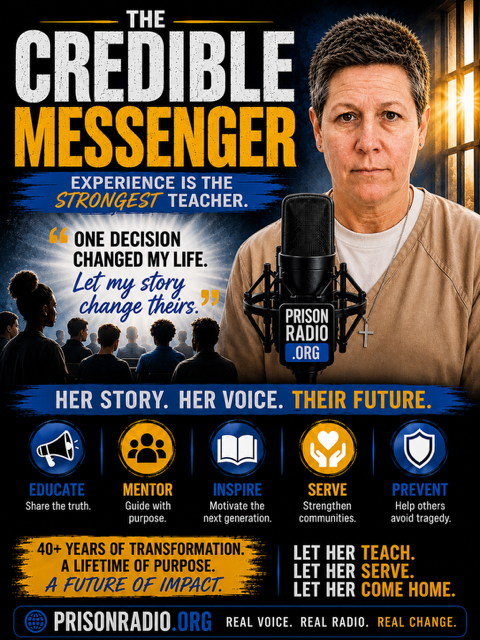
For more than four decades, Karen Brown has lived with the consequences of one tragic decision made as a young adult. She entered prison at just 21 years old. Today, after 40+ years of incarceration, the question facing Kentucky is no longer who Karen Brown was in 1986-but who she has become.
Clemency exists for people whose lives demonstrate extraordinary transformation. If rehabilitation, accountability, service, and redemption are meant to mean anything, then Karen Brown’s case deserves serious consideration.
More Than Time Served
Time alone does not justify clemency.
Change does.
Throughout her incarceration, Karen Brown has dedicated herself to becoming a positive influence on others. Rather than allowing decades behind prison walls to define her, she has chosen to invest in the lives of those around her. She has pursued education, developed her faith, mentored other incarcerated women, participated in programming, and used her experiences to encourage better choices.
Perhaps one of the most meaningful aspects of her journey has been her commitment to working with young people.
Karen understands something few people ever can: how one poor decision at a young age can permanently alter the course of a life. She knows firsthand how immaturity, poor judgment, and circumstances can collide with devastating consequences. That perspective cannot be learned from a textbook. It comes only through lived experience.
The Messenger Young People Need
Today’s youth face enormous pressures-violence, addiction, peer pressure, social media, and impulsive decision-making.
Karen Brown offers something few people can: lived experience.
For decades, while incarcerated, she has used that experience to help young people make different choices than she once did.
Beginning in the late 1980’s, Karen participated in Books Behind Bars, working directly with troubled seventh and eighth-grade students. Through honest conversations about accountability, consequences, and hope, she challenged young people to think differently about the choices they were making.
She also shared her testimony and experience with college students from UK, Uof L, Eastern Kentucky University, Northern Kentucky University, and Western Kentucky University, who were visiting the institution to learn about crime, punishment, and rehabilitation. Those conversations gave students an opportunity to hear firsthand how one decision can alter an entire life-and how redemption remains possible.
Karen was also selected by prison administrators to participate in Jefferson County court diversion programs, where she spoke to youth and adults facing criminal justice involvement. Significantly, those who participated in the programs with Karen, did not return to prison as inmates themselves-a powerful indication of the impact that incredible messengers can have on changing lives.
This work was not a one-time event. It spanned over years and reflected the confidence prison officials placed in her ability to communicate honestly, responsibly and effectively.
Today, after more than forty years of incarceration, Karen has already demonstrated that her story can save lives. Clemency would simply allow her to continue that work beyond prison walls, reaching even more young people, schools, churches, recovery programs, and communities across Kentucky.
Turning Pain Into Prevention
Communities across America increasingly recognize the value of justice-impacted individuals helping prevent crime before it happens.
People with lived experience can often reach young people in ways that traditional speakers cannot.
Karen’s life story could become a powerful tool for:
· Violence prevention
· Decision-making education
· Youth mentoring
· Character development
· Restorative justice initiatives
· Faith-based outreach
· Recovery and resilience programming
· School and community leadership events
Her experience does not erase the harm of the past.
It helps prevent future harm.
Kentucky Has Already Invested in Her Rehabilitation
For over four decades, Kentucky has housed, supervised, educated, and rehabilitated Karen Brown.
The question now is whether society will allow that investment to benefit the public.
If rehabilitation is real, shouldn’t communities have the opportunity to receive the benefit of it?
If redemption matters, shouldn’t transformed lives be allowed to serve others?
If accountability includes making amends, shouldn’t Karen be permitted to spend the remainder of her life helping young people avoid the mistakes she cannot undo?
Clemency Is About Mercy-and Public Good
Executive clemency is not about declaring someone innocent.
It is about recognizing that continued incarceration may no longer serve the interests of justice.
Karen Brown has spent more than forty years paying for one terrible decision made as a young adult.
Now imagine what forty years of wisdom could do outside prison walls.
Imagine the schools.
The churches.
The community centers.
The youth sports programs.
The recovery groups.
The juvenile justice programs.
Imagine the lives that could be changed because someone chose to tell the truth about consequences, accountability, and hope.
A Voice Worth Hearing
Karen Brown has begun sharing her story publicly through her Prison Radio commentaries.
Those broadcasts demonstrate something important: after more than forty years, she still wants her life to matter-not for herself alone, but for others.
Her voice is thoughtful.
Her message is hopeful.
Her purpose is service.
Kentucky has an opportunity to transform one story of tragedy into thousands of stories of prevention.
That is what clemency can make possible.
The Question Before Kentucky
The question is no longer whether Karen Brown committed a serious crime.
That question was answered decades ago.
The question today is whether Kentucky believes people can truly change.
If the answer is yes, then clemency should remain a meaningful part of our justice system-not merely as an act of mercy, but as an investment in public safety, restoration, and hope.
Karen Brown cannot rewrite her past.
But she can help write a different future for countless young people who still have time to choose a different path.
Perhaps that is one of the strongest arguments for clemency of all.
Because sometimes the greatest contribution a person can make is ensuring someone else never repeats their mistake.
Kentucky does not need to wonder whether Karen Brown can help young people. She already has. For decades, prison officials trusted her to mentor troubled youth, speak with college students, serve on panels, and participate in diversion programs because they believed her story could change lives. The question now is whether Kentucky will allow that proven work to continue outside prison walls.



Comments