
Celebration of Life: When Life in Prison Becomes a Death Sentence

Seeing the person | Considering the possibility

On November 5, 2026, Governor Gavin Newsom utilized his constitutional authority to commute the sentences to all 548 people on California’s death row. This was the same day that three individuals were put to death, executed on that one single day. The contrast with this triple execution day did not go unnoticed…at least not in my circles. Executions were carried out in Indiana, Florida and Alabama. While multiple executions have been rare in more modern times, there had also been another recent ‘3-execution day’ this past August-in Oklahoma, Tennessee, and Alabama. Prior to this, when Governor Newsom first took office, he issued a moratorium on executions…March 2019. (Death Penalty Information Center).
Even mass clemency raises difficult questions. Commuting a death sentence to life without the possibility of parole may spare someone from execution, but it doesn’t necessarily preserve every opportunity for judicial review or future release. For individuals pursuing resentencing or parole eligibility through the courts, an involuntary commutation can have unintended legal consequences. In some cases, the punishment changes while the possibility of leaving prison does not. We should be able to save someone from execution without automatically closing the door on the possibility of redemption and release that may have just begun to open. In Oregon v. Haugen (2024), the Oregon Supreme Court addressed a situation where an incarcerated individual challenged his death sentence and sought an opportunity for resentencing that could potentially have resulted in life with parole.
But after that governor commuted his sentence to life without parole, the court concluded that the commutation prevented the sentencing relief he had been previously pursuing.
Certainly, the commute of an execution is worth celebration. As of November 5, 2026, there are 1,409 people on death row in the U.S., including 30 women. This is with Governor Newsom’s historic clemencies. According to The Sentencing Project’s January 2025 report there are 56,245 people serving life sentence without the possibility of parole. More striking is that there are 97,160 serving life with the possibility of parole and virtual life (considered at 50+ years) with 41,398 individuals for a total of 194,803. This does not account for those on death row. Nearly 70,000 people serving life sentences committed their offenses before the age of 25. It should also be noted that the data, at least with those noted as having the opportunity for parole may still not be accurate for individuals who live in states such as Kentucky, where the parole board has issued a ‘serve-out’ ceasing any further opportunities before the board, giving the individual no further opportunity for review.
What does this mean? One in six people incarcerated are serving life sentences. Perhaps even more striking is that in 2024 nearly 195,000 people in U.S. prisons were serving life or virtual life, which is nearly as many people that were in the entire U.S. prison system in 1970. What once represented nearly the nation’s prison population, now represents only those serving its longest sentences.
Imagine walking into the ‘Shoe’ at Ohio State in Columbus, on game day. More than 100,000 fans fill the stands, nearly every seat occupied.
Now imagine filling that stadium a second time.
That is nearly the number of people serving life or virtual life sentences in U.S. prisons.

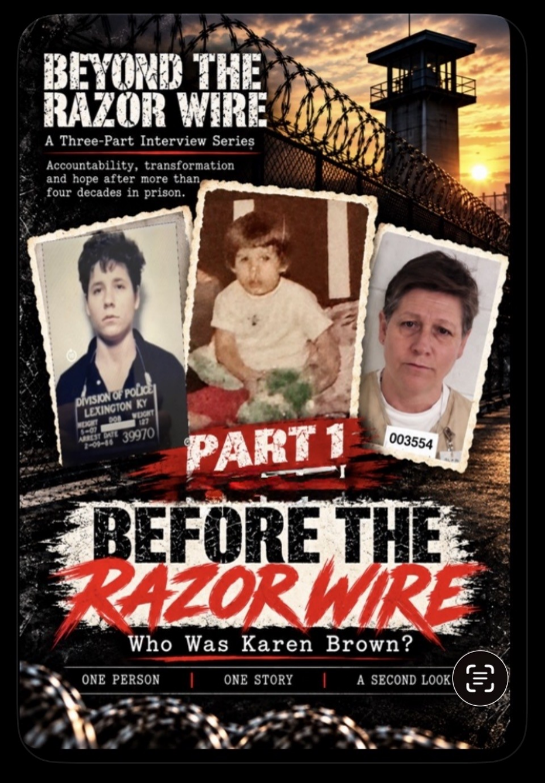
Behind those numbers are human beings, many of whom have spent decades growing older, accepting responsibility, and rebuilding their lives behind the razor wire. How may will ever have a meaningful opportunity to demonstrate who they have become?
These are not just prison ID numbers, but people with families, histories, stories. Many have spent decades behind bars, growing older, accepting responsibility, and demonstrating meaningful change.
Some will eventually return home. Others will die behind prison walls.
If we believe in rehabilitation, shouldn’t we also believe in the possibility that people can change? Doesn’t their transformation deserve meaningful consideration?
This is not about minimizing harm caused by serious crime or suggesting we just open the gates.
We have long debated the morality of capital punishment. We rarely have applied that same scrutiny to sentences that may guarantee someone will spend their final breath behind those razor wires.
The sentence may be different. The outcome may not. That matters…not only to those incarcerated but to mothers, fathers, sisters, brothers, aunts, uncles, cousins and friends…now or decades later, if they are still around.
In the meantime, our correctional institutions encourage rehabilitation, education, and personal growth.
People spend decades doing precisely what we are asking of them. They grow up, mentor others, earn degrees, develop skills and contribute positively to their prison communities.
What happens when none of those transformations can meaningfully influence their future?
We cannot continue to promote rehabilitation while refusing to consider the possibility that rehabilitation has occurred.
This isn’t about minimizing the harm caused or suggesting everyone is automatically released.
There is something deeply contradictory about a system that asks people to change while offering no meaningful opportunity for that change to matter.
Perhaps the question we should be asking is not simply how long someone deserves to be punished.
Perhaps we should also ask whether punishment must always end in death.
Hope should not have an expiration date.


Comments